






Light Weight vs Heavy Weight Coats
Two weights. One purpose. Find the cloth that suits the way you move through the weather.
WHAT DRIZA-BONE IS MADE OF
Every Driza-Bone coat starts as cotton. What makes it oilskin, or waxed cotton, is the finish: a specialised blend of oil and wax worked into the cloth so rain beads and wind has to work harder to get through.
That is the material behind the name. Dry as a bone, since 1898. The question when you are choosing a coat is not whether the cloth will look after you. It is which weight matches the weather you actually live in.
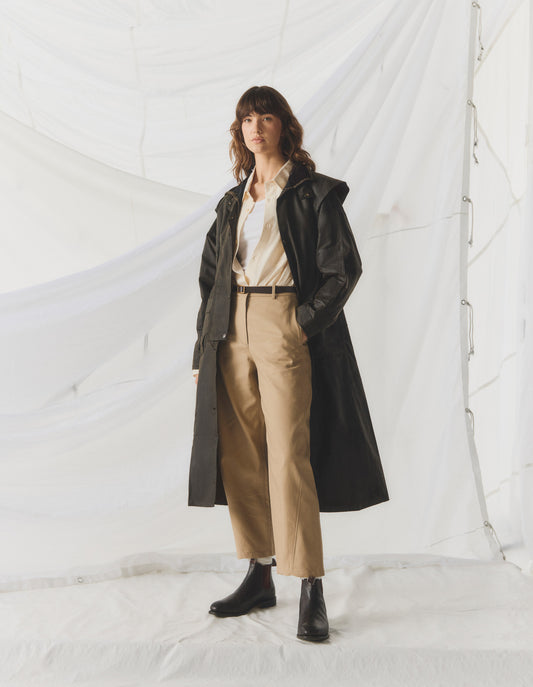
Lightweight waxed cotton is P140 FCF Hybrid Aero, at 155 grams per square metre. It has an emulsified wax finish and a dry hand feel, so the coat protects you without the bulk of a winter layer. It is the cloth for spring, summer and those in-between days that start cool and finish warm.
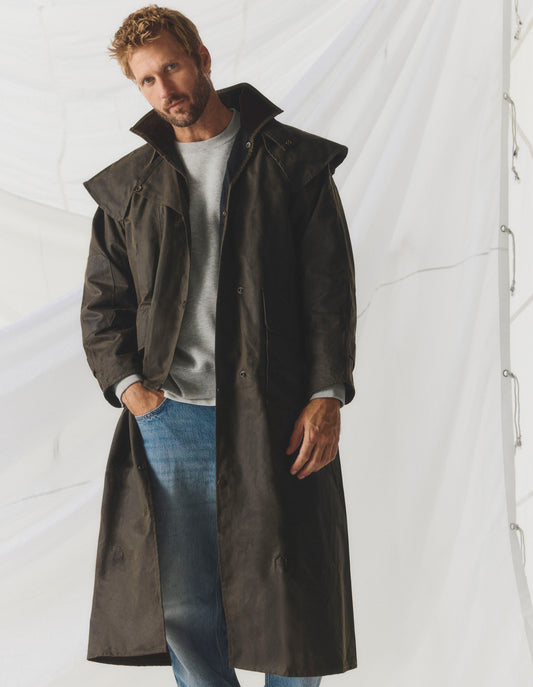
Heavyweight oilskin is P270 Silkwax or P270 Everwax Vintage, at 350 to 405 grams per square metre. There is more cotton between you and the weather, and a more structured feel on the body. It is the cloth for winter, colder climates, and long days outdoors.
Both weights are water resistant. They are designed to shed rain and cut wind, and they reward care. Keep the finish in good order and the coat will do the work it was made for. Leave it too long between reproofs, or ask it to stand in heavy weather with a tired finish, and water will find its way in, as it will with any waxed cotton.
HOW TO CHOOSE
Choose lightweight if most of your year is mild. If you walk, travel, move between a vehicle and a yard, or want a coat you can wear over a shirt without feeling packed in, this is the cloth. Think spring fronts, a summer storm that passes, and days that cannot decide on a temperature.
Choose heavyweight if winter is a real season where you live. If you ride, work stock, stand in wind, or spend long days outside when the weather does not lift, the extra weight is doing something useful. It is more cotton, more coverage, and a coat with the presence those days ask for.
Plenty of people keep both. A lightweight Ranger through the warmer months and a heavyweight Rider or Ranger Heritage when the weather turns is a more useful pairing than one coat asked to cover every season.
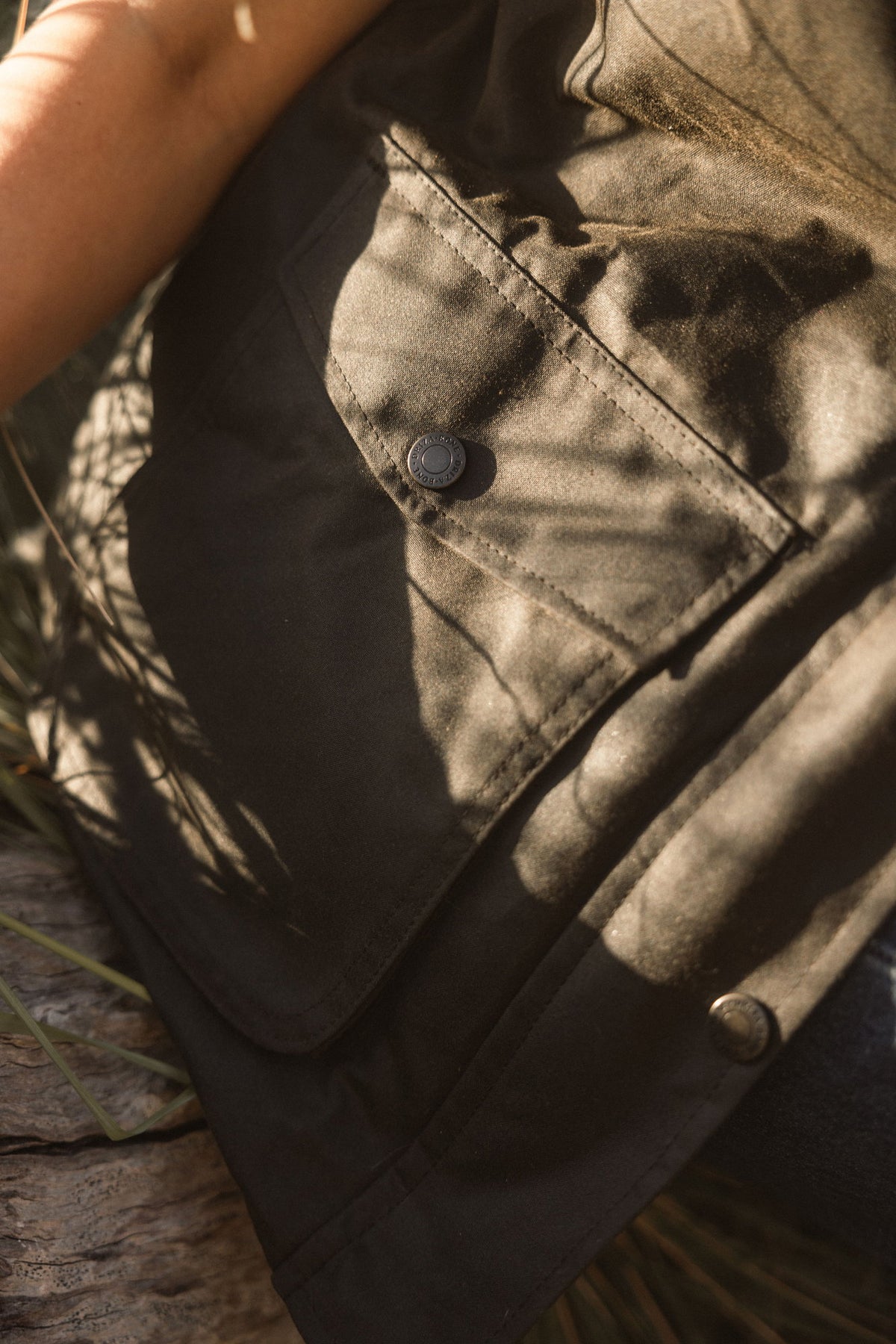
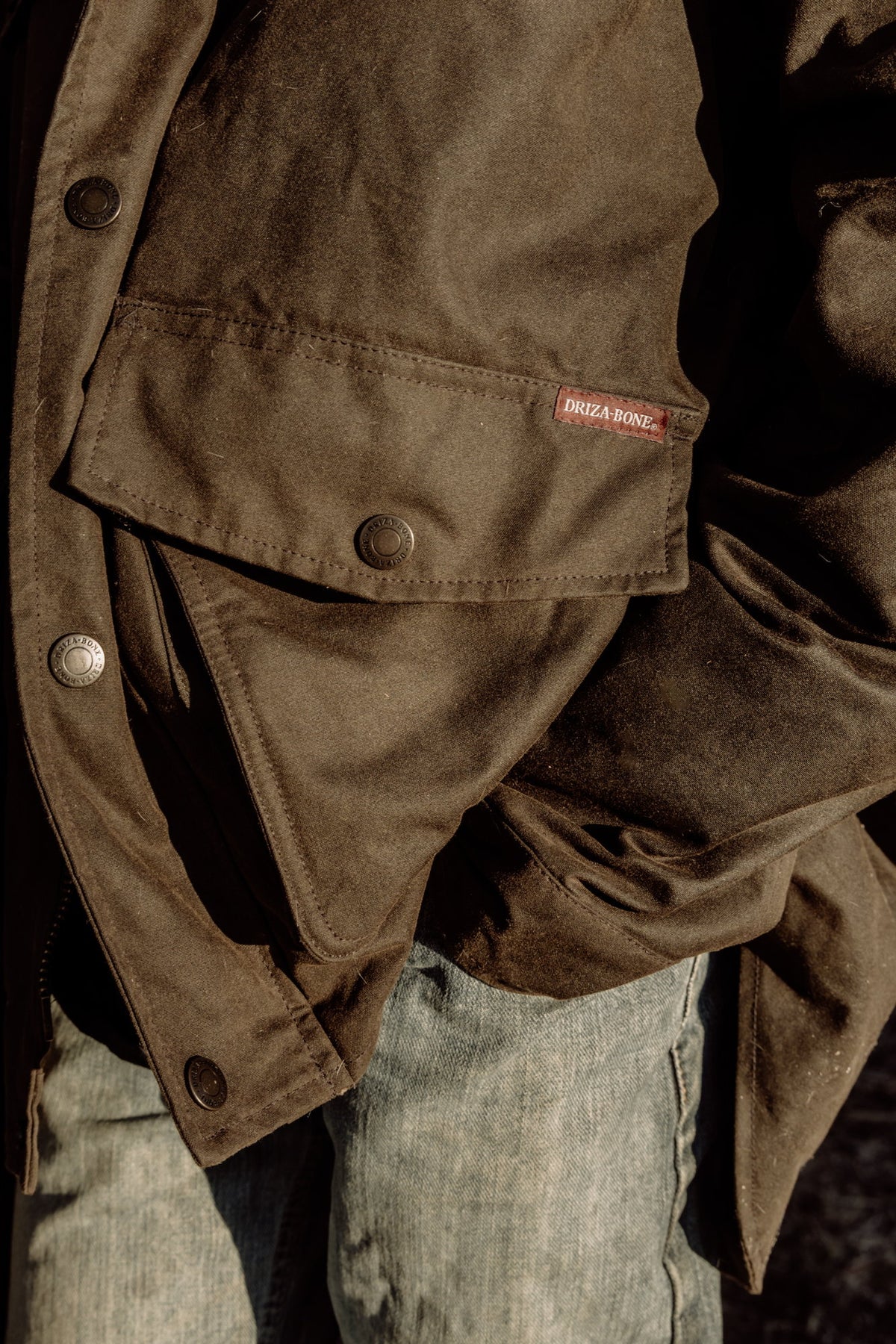
Across both weights you will find the details that have always made a Driza-Bone work: a storm cape to shed water off the shoulders, a fantail so you can sit a horse or a bike without the hem riding up, double-entry pockets you can use without opening the coat to the weather, and cuffs and neck tabs that close the gaps wind looks for. Those details travel from cloth to cloth. The weight is what changes how the coat feels, and which days you will reach for it.

Lightweight waxed cotton
THE MATERIAL
P140 FCF Hybrid Aero is a 100% cotton cloth finished at 155 g/m², which is less than half the weight of traditional P270 oilskin. The emulsified wax finish gives it a drier handle than classic oilskin. It drapes more readily, packs more easily, and sits comfortably over a shirt or a light knit when the afternoon warms up.
You still have a tightly woven cotton that sheds water and takes the edge off the wind, without the mass of a winter coat. On a mild day that warms as it goes, that lighter build is exactly the point.
The finish can be renewed at home with Reproofing Spray, so the coat stays a working piece rather than a single-season layer.

WHERE THE LIGHT WEIGHT CLOTH LIVES
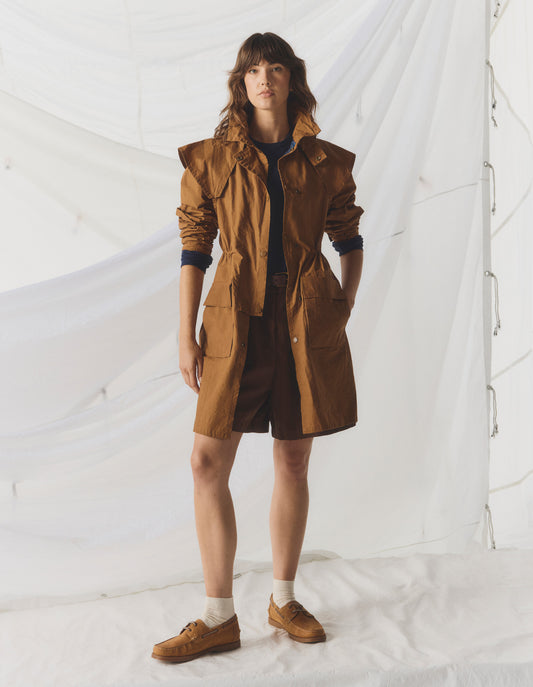
If you want the classic Driza-Bone shape in the lighter cloth, start with the Light Weight Ranger Coat. It is a shorter, everyday take on the Rider: storm cape, snap storm flap, fantail back vent, extra-large double-entry pockets and adjustable cuffs, lined through the body. Men’s and women’s versions share the same P140 cloth and emulsified wax finish.
The Light Weight Town & Country Coat uses the same cloth in a cleaner town cut: welt pockets, a concealed placket, a centre-back vent and a storm cape. It is the lighter option when you want weather protection that moves as easily through a street as a paddock.
When a full coat is more than the day needs, the Light Weight Lumberjack Jacket and Light Weight Jumbuck Vest keep the same finish in shorter shapes. The Unisex Light Weight Worker Jacket adds a kangaroo leather collar, a two-way zip, underarm eyelets and a scooped hem: the same cloth, built for days that ask a little more of the garment.


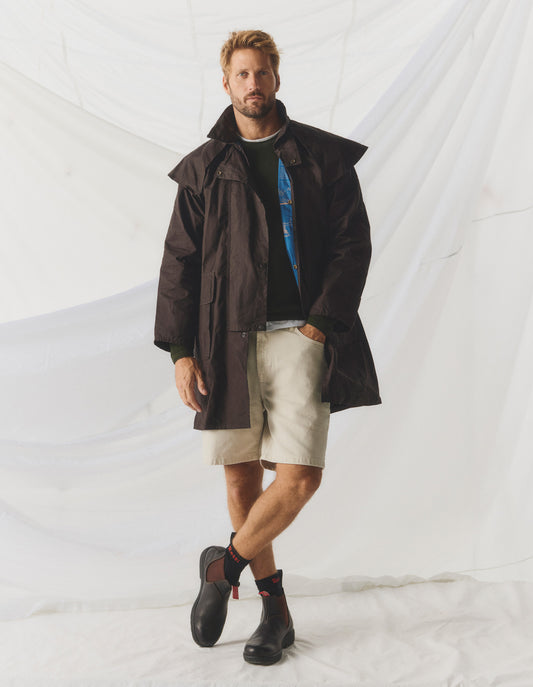


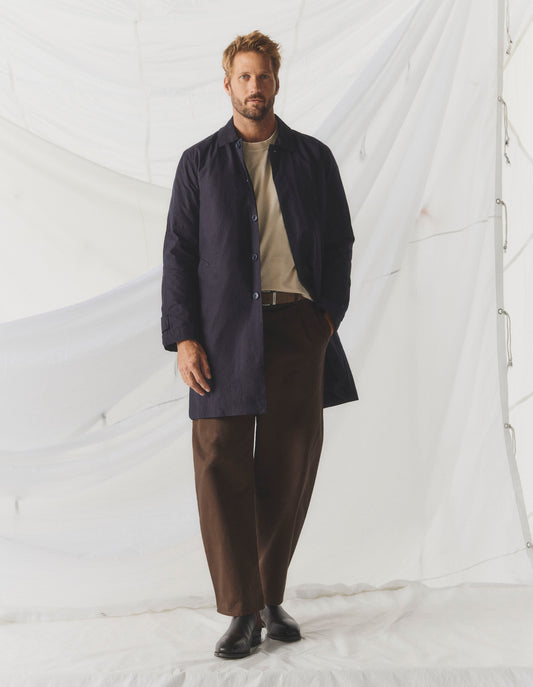

THE ENVIRONMENT
Lightweight belongs to the seasons that cannot make up their mind.
A typical day in this cloth starts cool enough for a coat, warms enough that heavy oilskin becomes more than you need, and may put a shower through the middle. That is the job P140 was cut for. Weather protection only works if the coat stays on. A lighter layer is the one you are more likely to keep wearing when the sky clears.
It is also a better travelling cloth. Less mass on the shoulder, a drier hand, easier to fold into a bag for a week that moves between towns.
Keep the heavyweight for true winter. Lightweight is the coat you reach for from spring through early autumn.

Looking after lightweight cloth
A quick check each month is enough. You do not need to spray on a schedule. If water still beads on the shoulder, the finish is doing its work. When rain starts to darken the cotton instead, a light spray will bring it back.
Use Driza-Bone Reproofing Spray, made for the lightweight range. One 200ml bottle looks after up to two garments. Clean the coat first: brush off dirt, sponge with cold water, and keep detergent away from the cloth. Spray from 10 to 15 centimetres, on damp or dry fabric, then work it in with a clean cloth so the finish settles evenly. Give the shoulders, seams, pocket flaps and cuffs extra attention. Hang the coat and leave it for twelve hours before you wear it again.
If the coat is dirty enough to need a hand wash with pure soap, plan to reproof it afterwards. Soap lifts the finish as well as the dirt. Do not machine wash, dry clean, starch or iron. Store the coat on a hanger with air around it, not in a plastic bag or a closed cupboard. And give a freshly sprayed coat time to set before it leans on a pale car seat or another garment you care about. The finish that keeps you dry can transfer while it is still new.

Heavyweight oilskin
THE MATERIAL
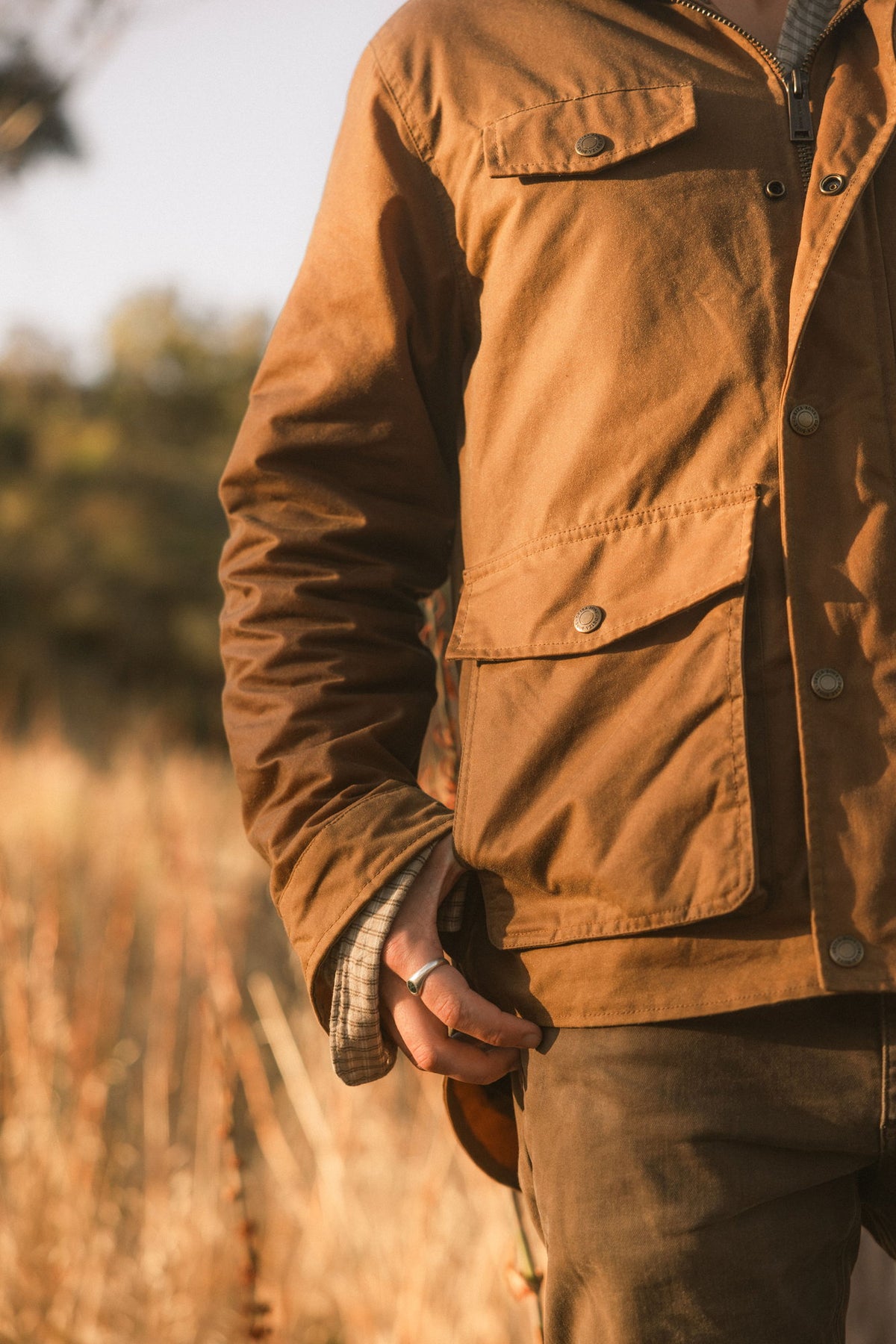
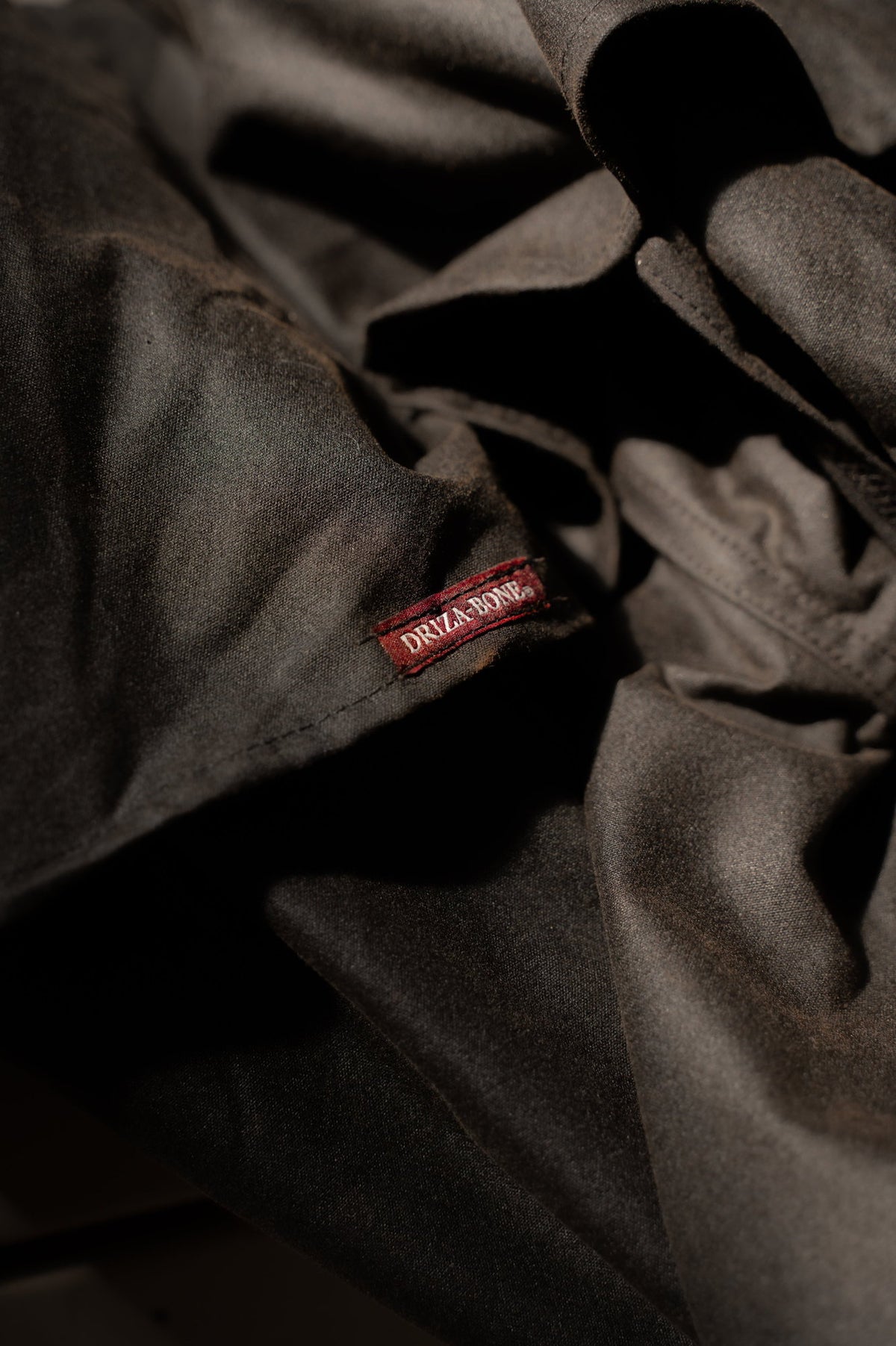
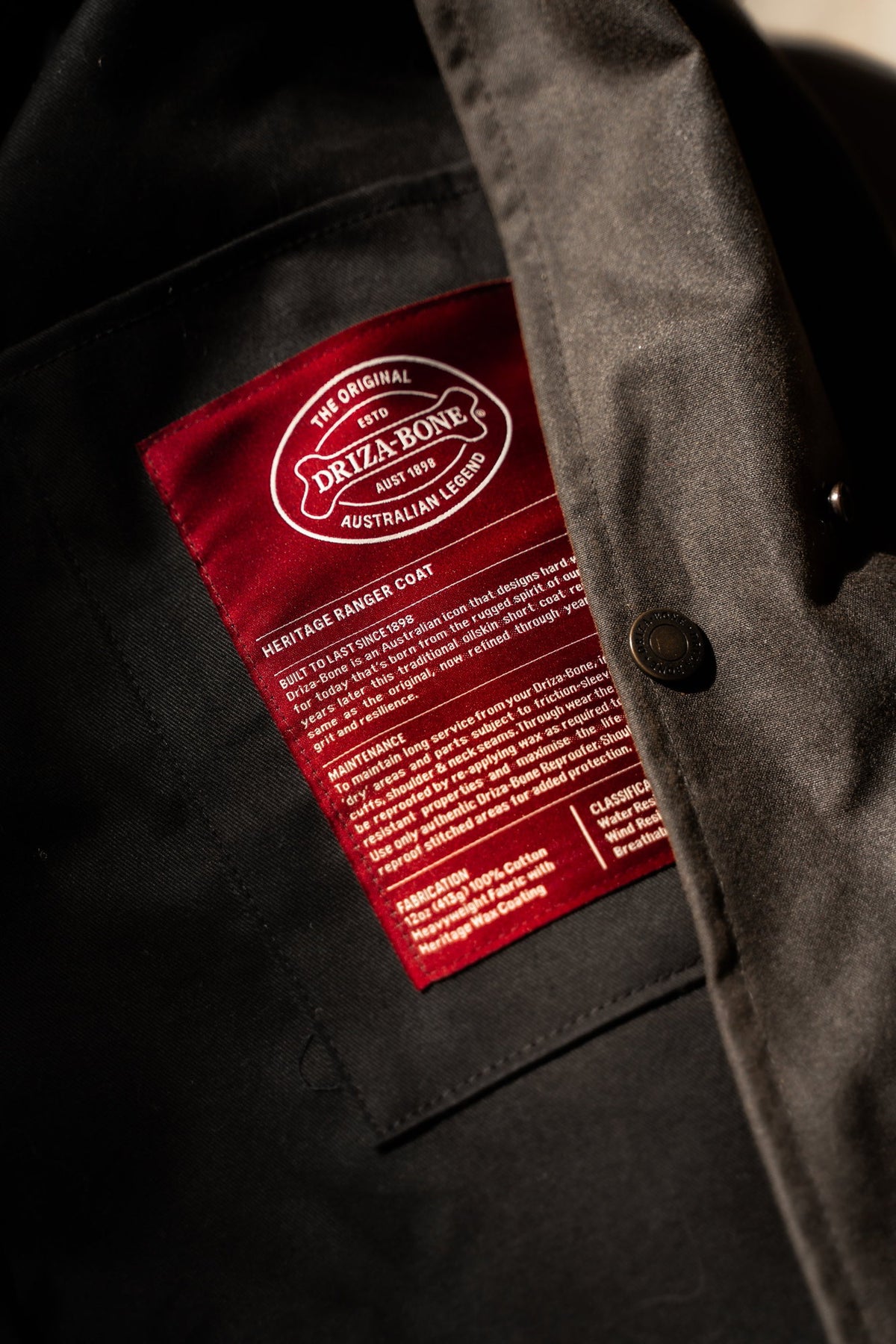
P270 cloth carries substantially more cotton per square metre than P140. Current heavyweight garments sit between 350 and 405 g/m², in two named finishes: P270 Silkwax and P270 Everwax Vintage. Each is traditional oilskin: 100% cotton with oil and wax worked through the weave, so the weather protection lives in the cloth itself.
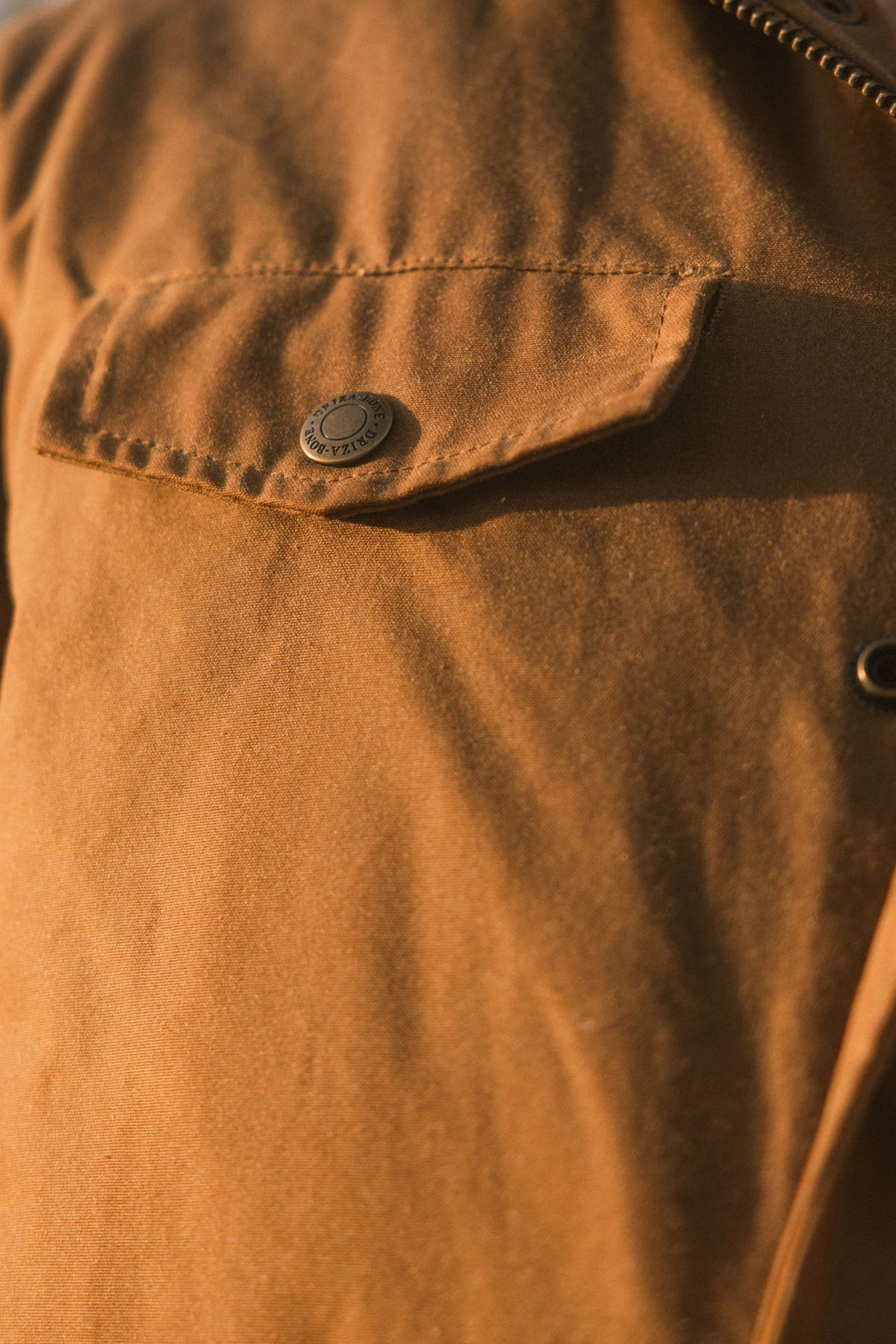
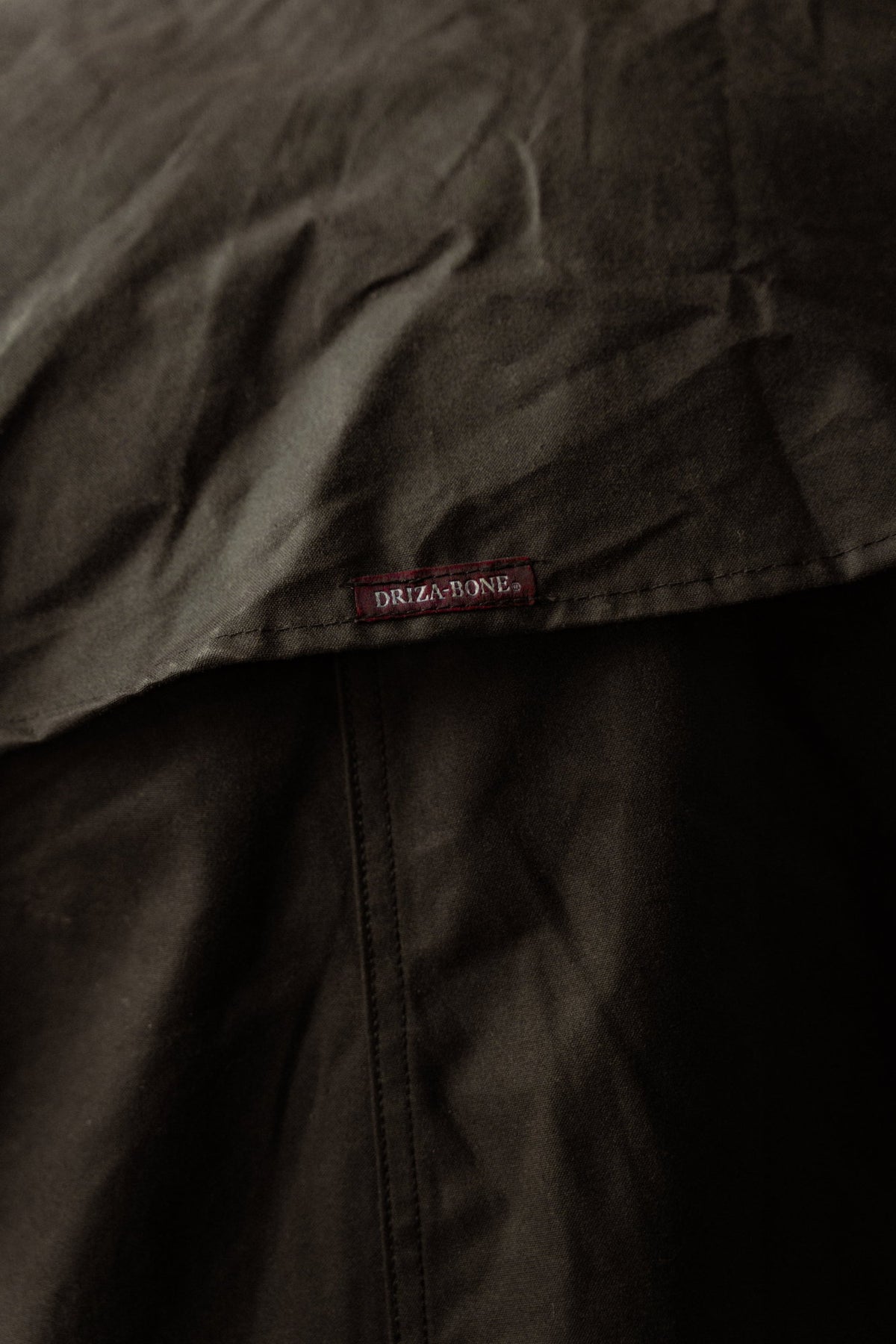
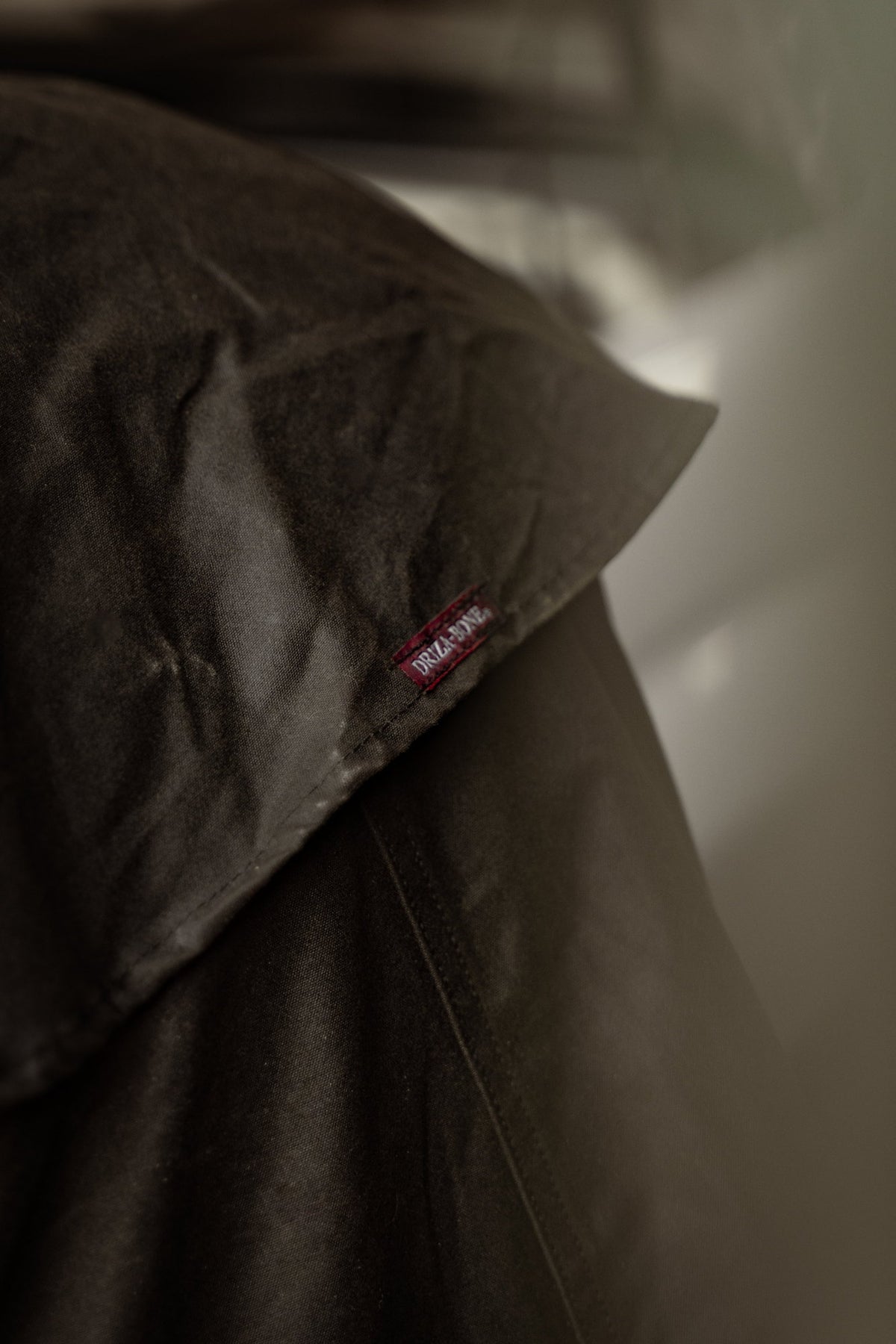
That extra mass is what you feel when you pick the coat up. The cloth has structure. It stands a little off the body. It takes a crease and keeps it. Over years of wear, it develops a character of its own: a softening at the elbow, a lightening at the pocket edges, a deepening of colour where rain has sat. That is the coat recording how it has been used, and it is one of the reasons these garments stay in a wardrobe for decades.
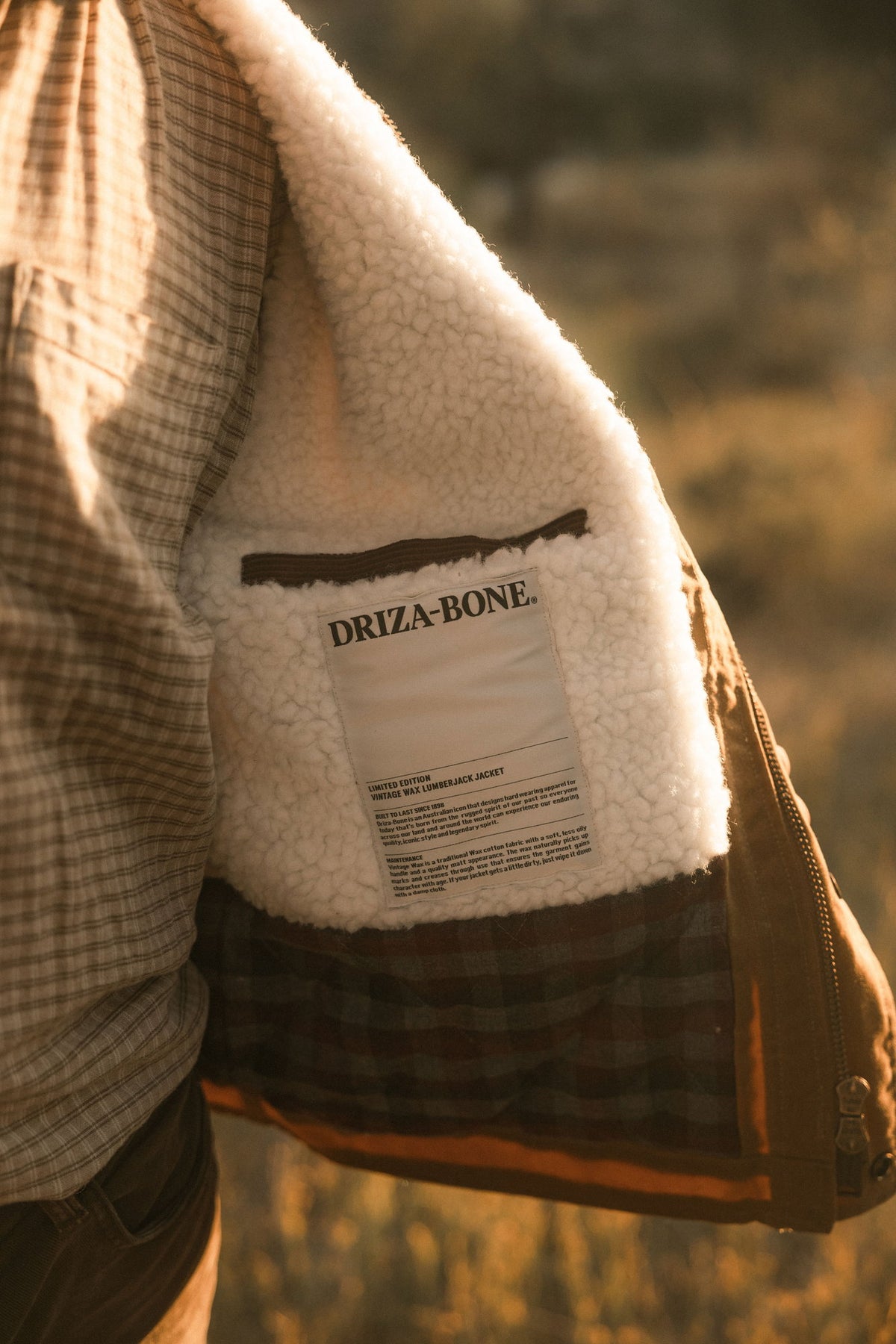
Warmth still comes from what you wear underneath. Oilskin is the outer wall. A button-in wool liner, a quilted gilet, a jumper or a vest does the insulating. Read the lining on the product page if warmth is the reason you are choosing heavyweight: some styles use Australian wool fleece or shearling, others a wool blend.
WHERE THE HEAVY WEIGHT CLOTH LIVES
The Rider Heritage Coat is the working original: a generous fit, cape shoulders, a long hem that covers a saddle, a fantail that opens over a horse or a bike, and a wool liner that buttons in when the temperature drops. The Ranger Heritage Coat is the slightly shorter sibling in the same P270 oilskin, with the same liner. Both are made in Australia.
The current Men’s and Women’s Ranger Coats carry the same heavyweight idea in an everyday long-coat shape, in P270 Everwax and oilskin. Check the product page for origin: some Rangers are made in Australia, others are designed here and made with our partners in Vietnam.
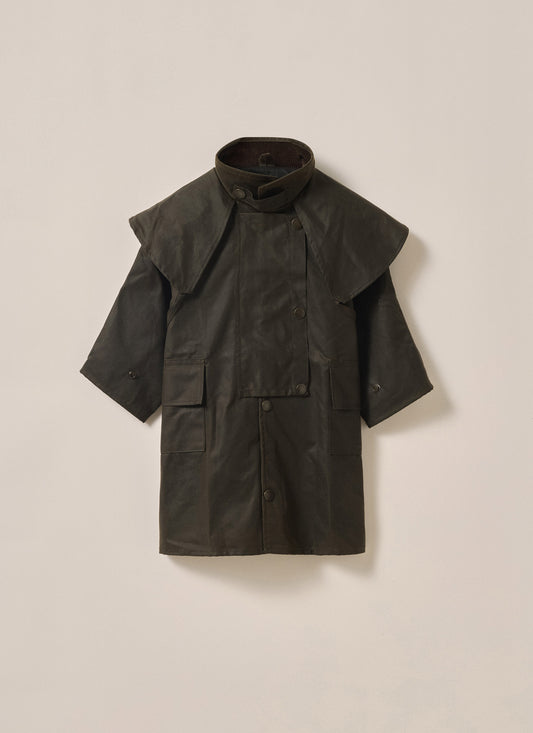
The Women’s and Kids’ Heavy Weight Town & Country Coats take P270 into a less agricultural cut, often with a removable quilted gilet. Lumberjack jackets and Jumbuck vests put the heavy cloth over a wool or shearling lining for cold days that do not need a full riding coat. The Vintage Wax Mac is the raincoat cut of the same cloth, with a check lining and a removable quilted gilet. The Oilskin Banjo Vest is a shorter, Australian-made expression of heavy oilskin when you want the cloth without the long hem.



THE ENVIRONMENT
Heavyweight belongs to the days when the weather does not pass.
Cold. Wet. Wind that finds every opening. A full day outside that does not ease off. That is the climate P270 was weighted for. The extra cotton creates a more substantial barrier. You feel held. You also feel the coat, which is a benefit in July and more than you want in a warm November.
This is the cloth that takes work and keeps a shape. Storm flaps, long or scooped hems, cape shoulders, fantails and, on riding coats, leg straps are there because the garment is expected to move through a day, not around it.
Build the warmth inside it. The shell cuts wind and sheds rain. The liner, jumper or vest keeps the heat. Worn that way, a heavyweight Driza-Bone is outdoor armour in the original sense: the piece you put on when you already know you will be out for a while.

Looking after heavyweight oilskin
Have a look once a month. Plan a full reproof every 12 to 18 months, sooner if the coat is out in weather every week, later if it lives on a hook in a dry hallway.
Use Driza-Bone Original Wax in the 200ml tin, an oil-and-wax compound made for oilskin. One tin will dress a standard coat. A long riding coat is happier with two. Stand the open tin in hot water until the compound liquefies. Never put it in a microwave. Lay the clean, dry coat flat and brush or sponge the dressing into the weave, spending extra time on shoulders, the neck seam, underarms, pocket edges and the creases in the sleeves. Those are the places weather tests first.
Then give the coat a little heat so the dressing moves into the cotton. A warm, sunny day is the traditional method. A hairdryer on a low setting, kept moving, is the indoor version. Hang it on a strong hanger and let it cool before you wear it. A coat that has been dressed properly behaves like itself again.
Day to day, brush off dirt and sponge with cold water. If the coat is truly filthy, hand wash in cold water with pure soap, rinse well, dry in moving air away from heaters and flame, then reproof. Do not machine wash, dry clean, starch or iron. Do not use leather dressings on oilskin.
Store the coat dry, with air around it. Avoid long spells in a cupboard or a plastic bag, where moisture can sit. If mould does appear, brush it off, sponge the spots with diluted vinegar, wash with pure soap (or a wool detergent if there is a shearling lining), dry out of direct sun, and dress the coat again. A coat that has been looked after this way can stay in work for decades. New P270 can feel firm at first. Wear, weather and the first dressing all quiet the hand, until the coat has taken your shape at the elbow and shoulder.
Explore the Light weight and heavy weight collections


